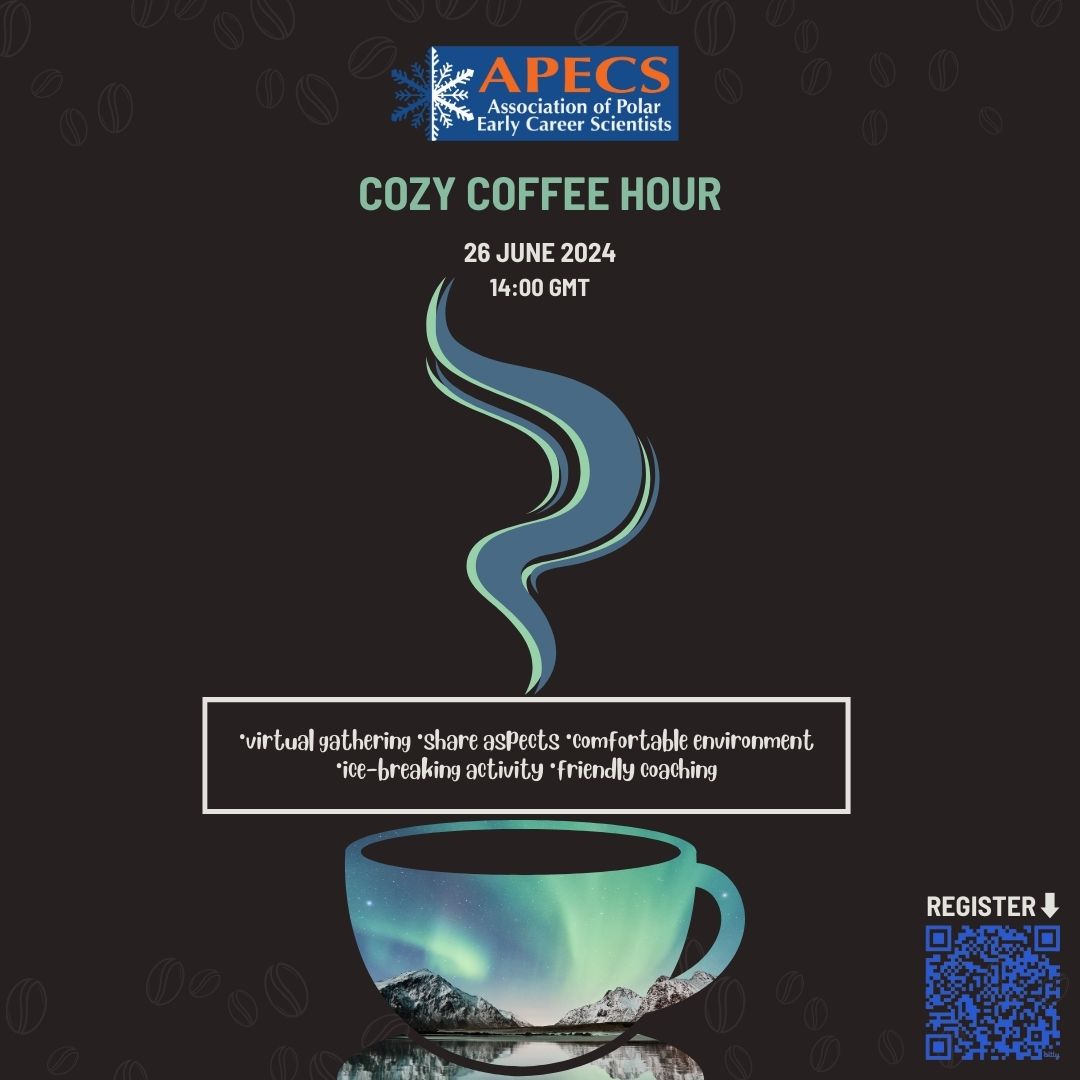
The APECS Community Development, DEI, and Mental Health Project Groups are collaborating to host a virtual gathering on June 26th at 14:00 GMT.
Read more ...
© Inga Beck, José Xavier,Aleksandr Krasnov, Inga Beck, Alexa Hasselmann (left to right)
In our APECS News, you can find news from and about the wider APECS network and our many events, activities and resources organized and developed by the APECS leadership, project groups and National Committees.
If you want to submit APECS news for this page, please use the link below. If you have any questions, This email address is being protected from spambots. You need JavaScript enabled to view it.
We keep only the news of the last 3 months on this page. Older news can be accessed in our APECS News Archive.
The APECS Community Development, DEI, and Mental Health Project Groups are collaborating to host a virtual gathering on June 26th at 14:00 GMT.
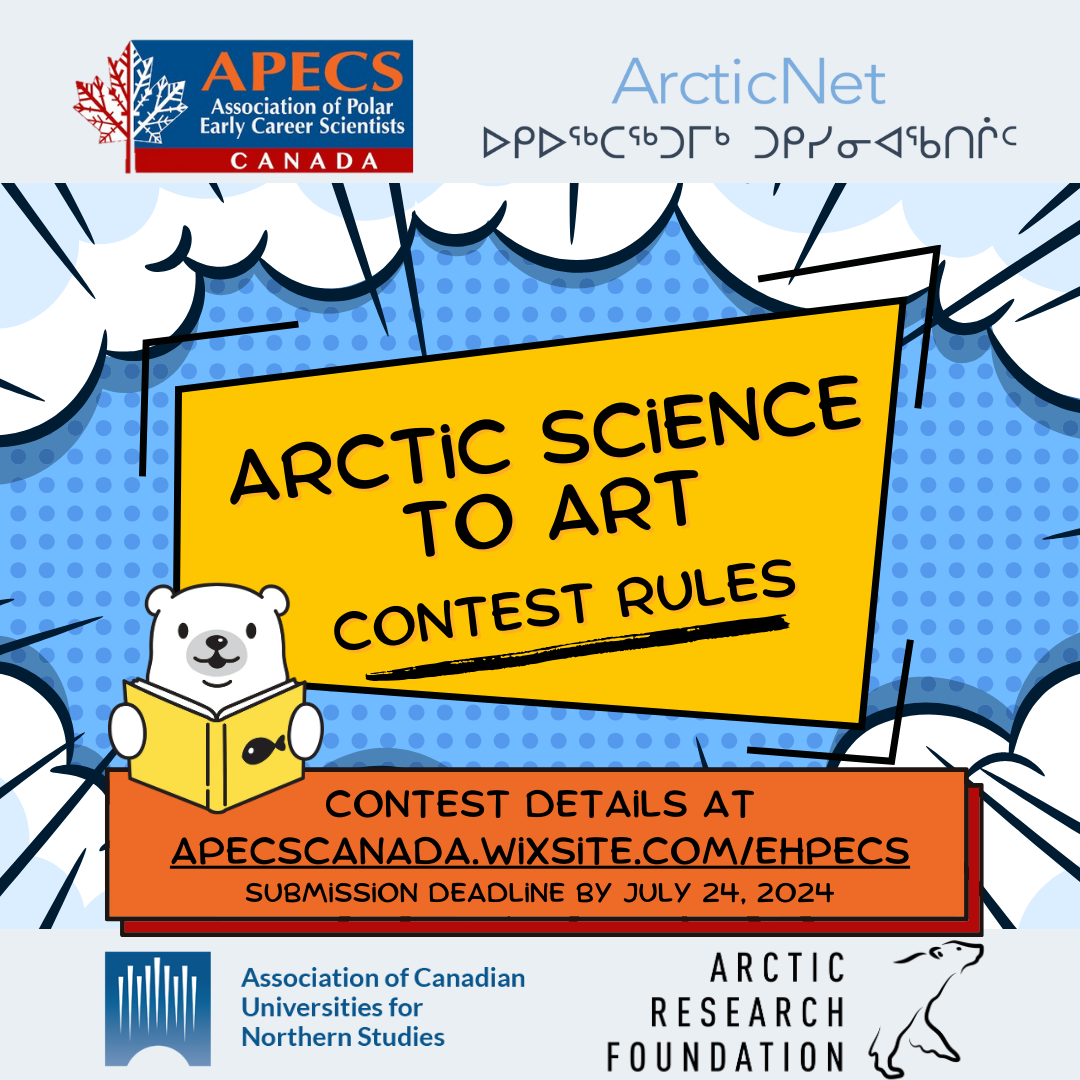
Read more ...APECS Canada is now accepting submissions for the 2024 Arctic Science to Art (AS2A) contest! Are you an early-career researcher, student or northern research assistant working in the Canadian Arctic?
Youth Together for Arctic Futures is a project that aims to bridge Arctic youth to their European peers. By fostering collaboration and mutual learning between Arctic and European youth, the project aims to provide Arctic and European youth with the necessary knowledge, skills, and opportunities to advocate for policy promoting a peaceful, sustainable and prosperous Arctic future.
A key part of the project is the establishment of an EU-Arctic Youth Dialogue, held alongside the EU Arctic Forum and the Indigenous Peoples’ Dialogue. The first EU-Arctic Youth Dialogue was held on 15 May 2024, as the last day of a five-day Arctic Youth Dialogue (AYD) program (11-15 May 2024) held in Brussels, Belgium.
Read more ...Arctic Congress Bodø 2024 took place from 29 May to 3 June 2024 in Bodø, Norway, hosted by Nordland Research Institute and Nord University. The event brought three conferences together in the European Capital of Culture 2024: the International Congress of Arctic Social Sciences (ICASS) XI, UArctic Congress 2024, and High North Dialogue 2024.
APECS, the Polar Science Early Career Community Office (PSECCO) and the High North Dialogue Academy hosted an early career and youth networking event on 29 May in the foyer of the Stormen Concert Hall, before the overall conference ice breaker. There were approximately 150 attendees. The event provided a fun and informal way for people to meet each other and share ideas and interests before the rest of the conference program began. Each organization was briefly presented and attendees were engaged in brainstorming how (polar) early career organizations could best support their work.
Read more ...
Do you want to contribute to APECS and be a part of our Council? Applications for Council Leadership and Project Group Leader positions are now open!
The 2025-2026 Council term is from 1 October 2026 through 30 September 2027. APECS Council members value the international networks they develop through the Council, as well as the recognition and accomplishments they gain through their work.
Are you interested? Find out more about the different APECS Council roles and how to apply on the Apply for Council webpage.
Read more ...
The APECS International Directorate will be closed 24 June - 14 July 2024 due to summer holidays of its staff members.
Read more ...The Association of Polar Early Career Scientists (APECS) and the Southern Ocean Observing System (SOOS, http://www.soos.aq) are looking for an early career scientist to join the SOOS Censusing Animal Populations from Space (CAPS) Capability Working Group (CWG) as ECR representative.
Read more ...
You are invited to join other Arctic early career individuals at a networking event & social co-hosted by APECS, PSECCO, and the High North Dialogue Academy on Wednesday, May 29th from 5:00 to 7:30pm (CEST / local time) in the Foajé of the Stormen Concert Hall in Bodø, Norway.
Read more ...We, the APECS Executive Committee (ExCom), held our annual in-person meeting on 21 and 22 March as part of the Arctic Science Summit Week (ASSW) and Arctic Observing Summit (AOS) in Edinburgh, Scotland, UK.
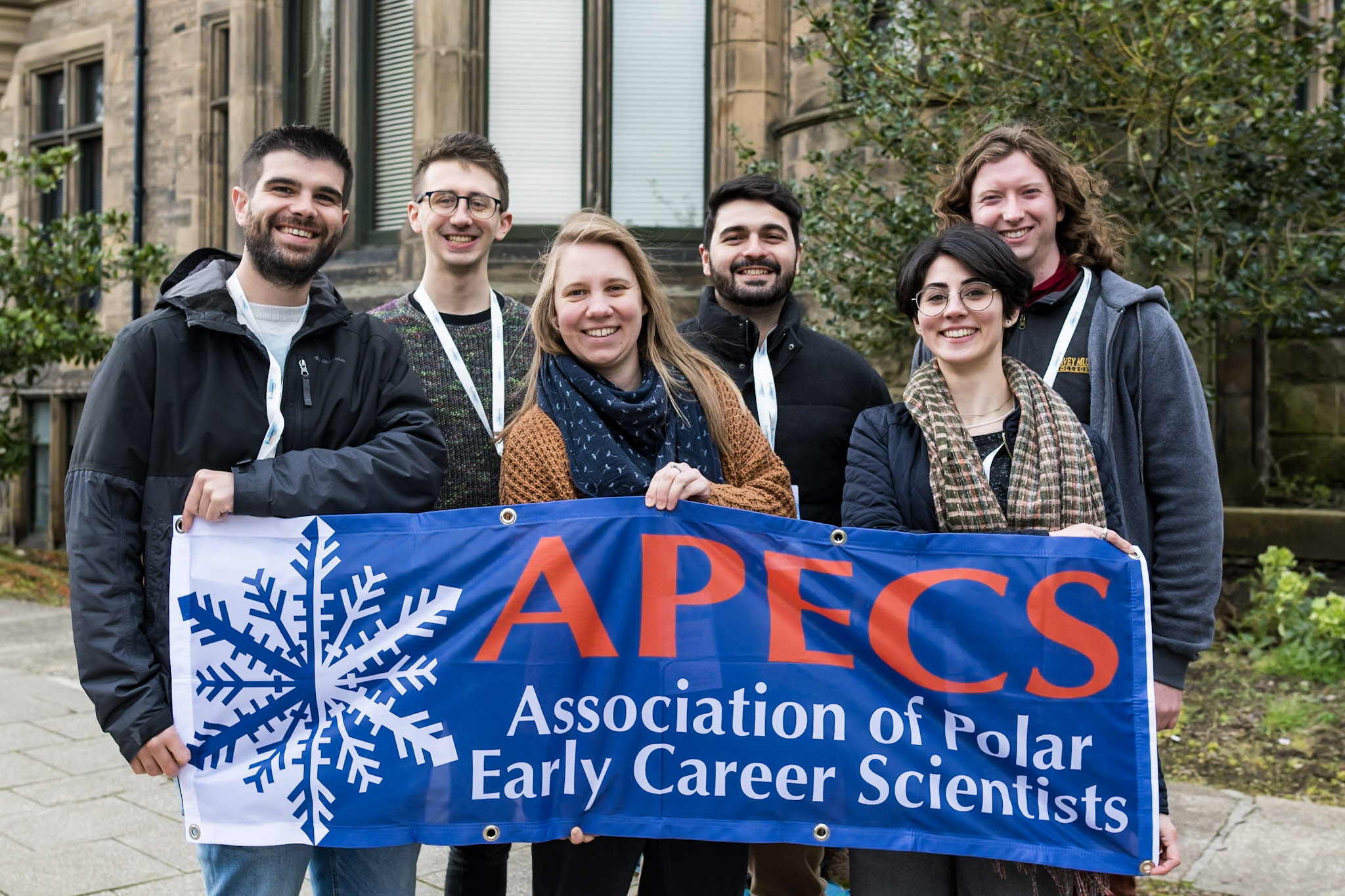 We met for two full days to discuss important topics related to the present and future directions of APECS. Topics included general communication within the organization, setting directions for the next APECS strategic plan and a Polar Early Career World Summit to be held alongside the upcoming ICARP IV and ASSW 2025 conference in Boulder, Colorado, USA. The meeting gave us the opportunity to discuss topics on an extended basis which is not possible during our digital bi-weekly two hour meetings. This was also the first time many of us met in person, so it was a great opportunity to get to know one another.
In December 2023, the APECS Diversity, Equity and Inclusion (DEI) Project Group, in collaboration with the Scientific Committee on Antarctic Research (SCAR) EDI Action Group and Thrive Lifeline, embarked on a journey to create a more diverse, equitable and inclusive (DEI) mindset and decision-making capability in our organizations leadership bodies. The DEI workshops focused on eroding intrinsic biases, identifying microaggressions, and how to intervene as a bystanding observer effectively and safely. These workshops were organized and held online.
Read more ...